
Collective
Las Mujeres del Barro Rojo
A women-led Zapotec pottery collective carrying generations of red-clay knowledge into new forms, markets and hands.
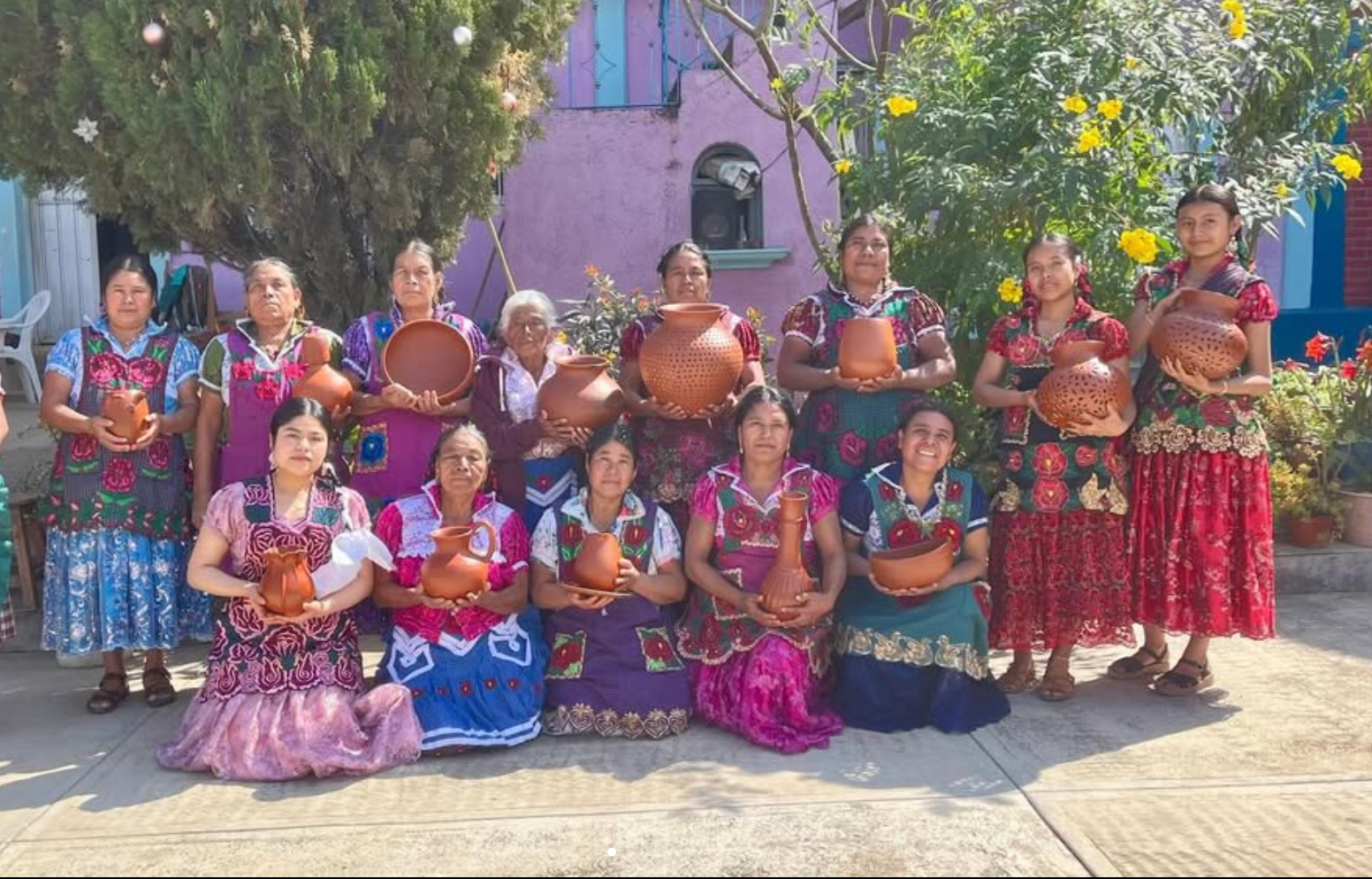
The heart of it
In the 1970s, Macrina Mateo Martínez began challenging the expectations placed on unmarried women in her community, traveling beyond San Marcos Tlapazola to sell her pottery directly. In doing so, she helped create new possibilities for the women making the village’s red-clay pottery — and for where their work could go.
The impact, in short
Lineage
20+ Generations
Macrina Mateo Martínez’s family has passed down the craft of barro rojo for more than twenty generations.
Leadership
15 Women
Mujeres del Barro Rojo brings together 15 women, each trained in the full production process.
Raw Material
Clay from El Picacho
The women hike to the mountain deposit, excavate the clay themselves, and carry it back to their studios.
Cultural Preservation
From Earth to Fire
Each piece is processed, hand-built, burnished, and fired using techniques rooted in generations of Zapotec knowledge.
What it is
In the Zapotec community of San Marcos Tlapazola, red clay is more than a material; it is a living inheritance. Women here have long shaped the local earth into comales, cazuelas and other vessels for their own kitchens and for trade with neighboring communities. For Macrina Mateo Martínez, that inheritance is especially deep: her family has passed down its knowledge of barro rojo for more than twenty generations, and she began learning the process at eight years old.
As a young woman, Macrina also began pushing against the expectations surrounding that tradition. At a time when unmarried women were expected to remain close to home, she started traveling beyond the village to sell pottery directly. She later formed Mujeres del Barro Rojo, a cooperative of 15 women whose work has carried the red-clay tradition of San Marcos Tlapazola to a much wider audience.
Today, the collective continues to work with clay gathered from the surrounding landscape, using techniques rooted in generations of Zapotec knowledge. Traditional cookware remains part of the practice, while Macrina and the women have also expanded the forms their red clay can take, bringing the work into exhibitions, collections and homes far beyond Oaxaca.
“Clay has memory... clay feels emotions.”
The craft & its context
Representing over 20 generations of Zapotec heritage, the pottery techniques used—including open-fire baking and the use of corn cobs and stones for smoothing—are among the few 'continuance of ancestral crafts' in Mexico still used in daily life.
The Harvest and The Hearth
The women gather their clay from El Picacho, a nearby mountain where the deposit cannot be reached by vehicle. They hike in, excavate the raw clay and carry it back to San Marcos Tlapazola, where it is processed into a workable material.
The connection between landscape and object is unusually direct: every vessel begins with earth gathered by the women who will ultimately shape it.
Shaped Without a Wheel
There is no potter’s wheel involved. Each piece is built and refined by hand using simple tools and techniques learned through practice and repetition.
The women shape, smooth and burnish the clay before applying its characteristic red finish. Every member of Mujeres del Barro Rojo understands the complete production process rather than specializing in only one step.
Learning With Macrina
Visitors can do more than watch the process. Immersive experiences can include staying in San Marcos Tlapazola, learning where the clay comes from, taking part in gathering it and working with the material by hand.
The vessel begins not in a studio, but in the mountain.
The people behind the project
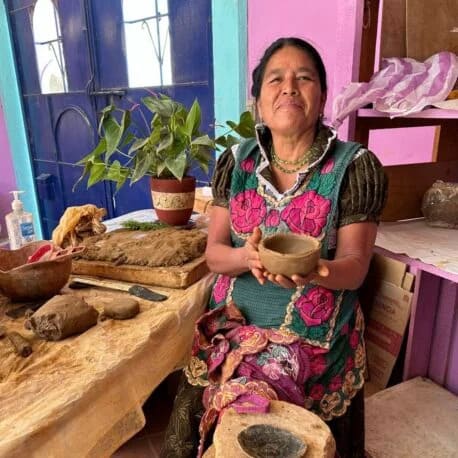
Macrina Mateo Martinez
Master Potter & Founder · San Marcos Tlapazola
Macrina is a renowned Zapotec artist who has been working with clay since the age of seven.
Her story
Having learned from her mother, Macrina broke with tradition fifty years ago by traveling beyond her village to sell her work. Despite initial criticism, she transformed the local craft into a globally recognized art form, eventually exhibiting at the MoMA.
In her words
“We are the women who work the red clay of San Marcos Tlapazola.”
Recommended by
Follow the thread
Across places and generations, women and their work are connected — through craft, tradition, community and shared experience. Sistra follows those threads.
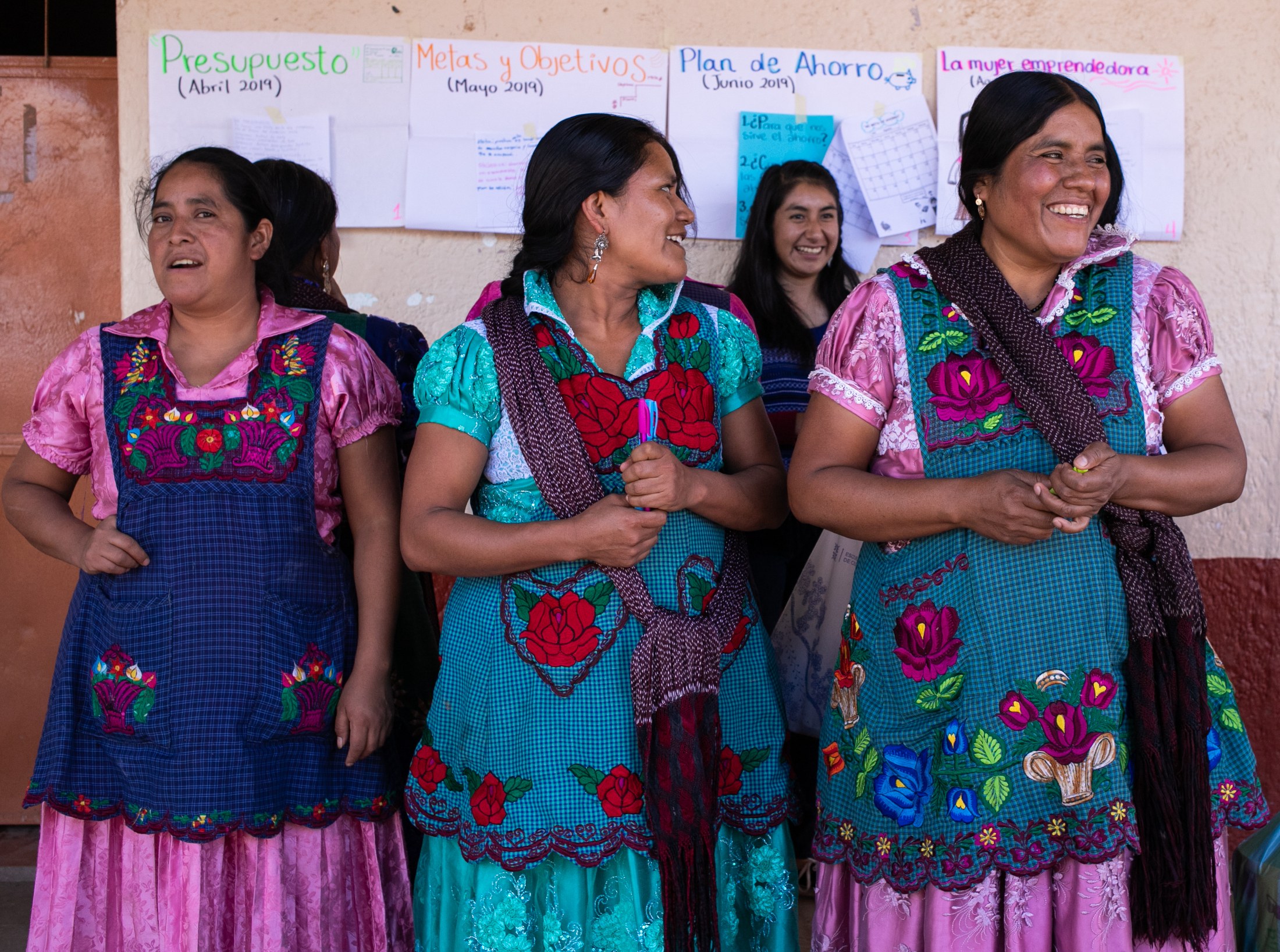
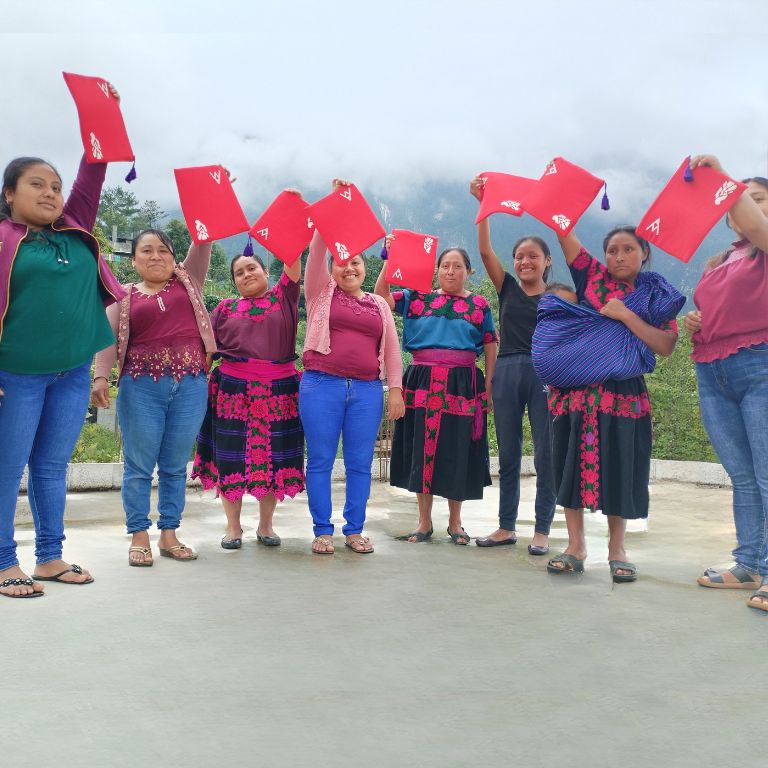
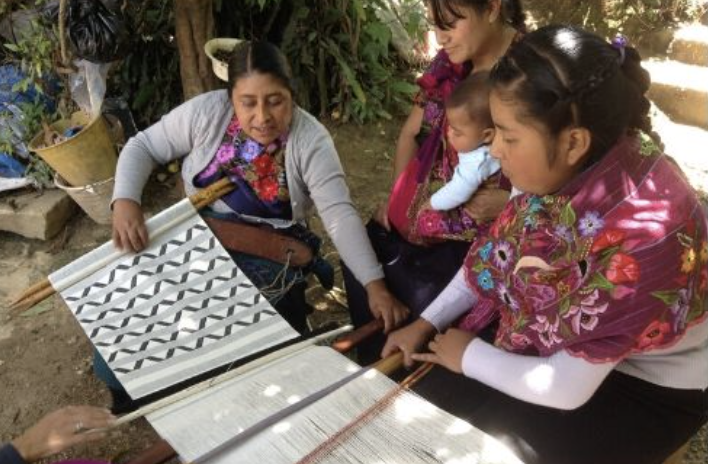
Meet more women in San Marcos Tlapazola
Experience San Marcos Tlapazola through its women on A Sistra × RoamCircle Experience Chapter 01 — Oaxaca.