Collective
Gráfica en el Barrio
A feminist printmaking collective where young women in Granada turn their experiences into art — and art into opportunity.
The heart of it
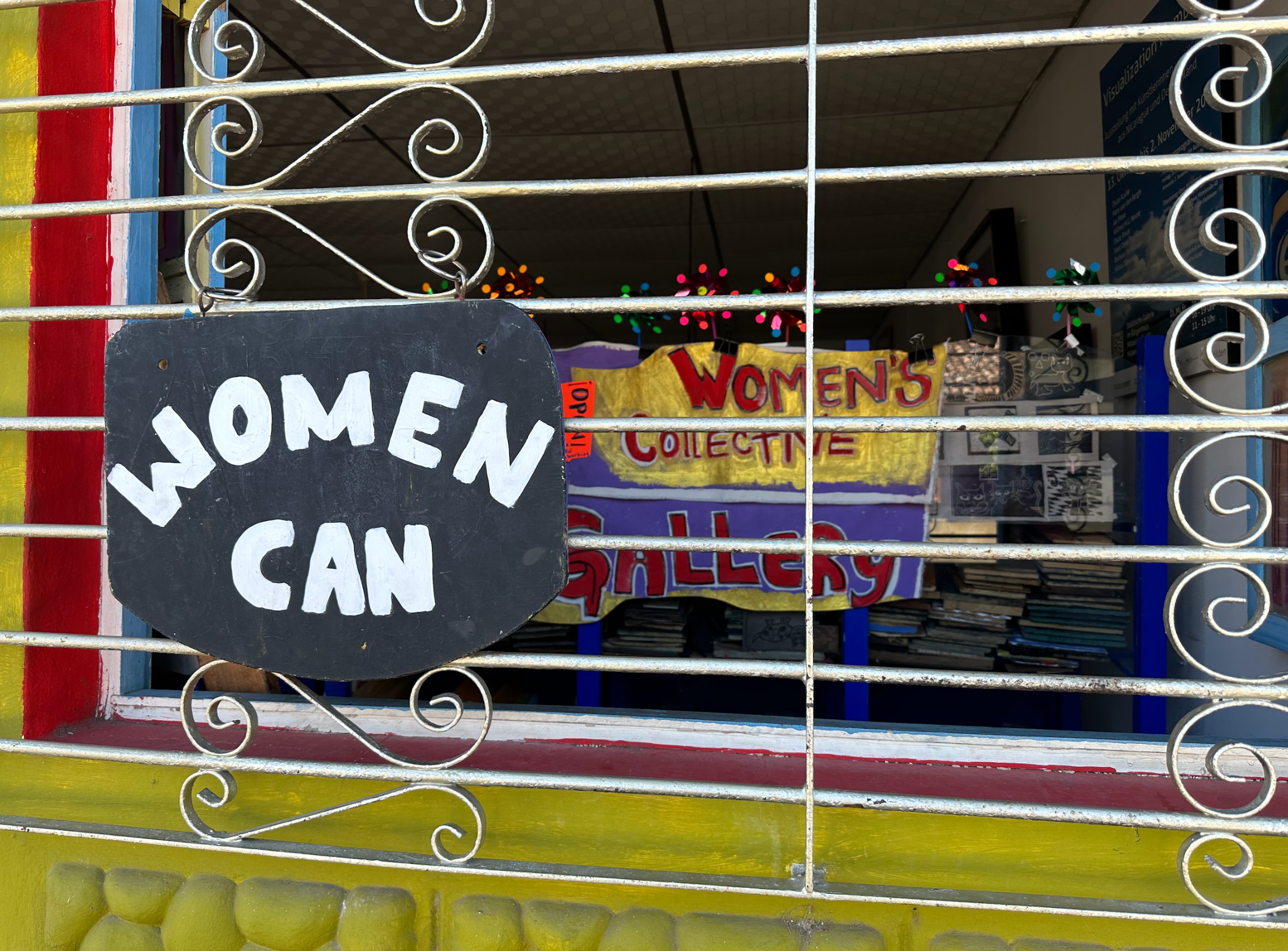
What began as an arts and digital-skills program for girls has grown into a feminist printmaking collective where young women create, sell and exhibit work rooted in their own lives.
The impact, in short
Community
Identity, Protected
Young artists learned to use pseudonyms and artistic self-portraits to share and sell their work online while protecting their identities.
Leadership
Art that Earns
Selling their prints has enabled members to earn their own income and contribute financially to their families.
From Granada Outward
Their printmaking has traveled beyond Nicaragua, with work exhibited in Costa Rica, Germany and international print exhibitions.
Art as a Voice
Experiences of gender, safety and everyday life become subjects the young artists can examine and make visible through print.
What it is
In Granada, Nicaragua, Gráfica en el Barrio uses printmaking as a tool for creative expression and economic independence. Its roots go back to work led by artist Alicia Zamora Noguera with girls and young women through Casa de los Tres Mundos, where art, digital skills and online safety came together in the same program.
In 2020, that work became Colectivo Tonantzin, bringing together young women from Granada and surrounding communities to learn woodcut and linocut, exhibit their work and sell prints. For some members, those sales have helped cover household expenses and education.
Today, that work continues through Gráfica en el Barrio, connected to Alicia’s studio in Granada — a place where women gather, make work and build greater independence through their own creative practice.
The craft & its context
The women work with graphic techniques including linocut and woodcut: images are carved into a surface, inked and transferred onto paper. What begins as a drawing becomes something reproducible — a print that can be exhibited, sold and carried far beyond the workshop.
Art as reflection
The prints are rooted in the artists’ own experiences. During Sistra’s visit, a worker described precautions the collective had taken in response to unwanted attention from men around the space. Some of the work engages directly with harassment and the experience of being a young woman in Granada, turning what happens outside the studio into material for reflection inside it.
Safety online
As the artists began selling and sharing their work digitally, privacy became part of the project. Members used pseudonyms instead of their real names and artistic self-portraits instead of profile photos, and the group identified a need for digital-security training specifically for young women.
Recommended by

Follow the thread
Across places and generations, women and their work are connected — through craft, tradition, community and shared experience. Sistra follows those threads.