Ikuntji Artists
An Aboriginal-owned art centre founded by women in Australia's western desert, carrying Luritja stories through painting, textiles, cultural memory and contemporary design.
The heart of it
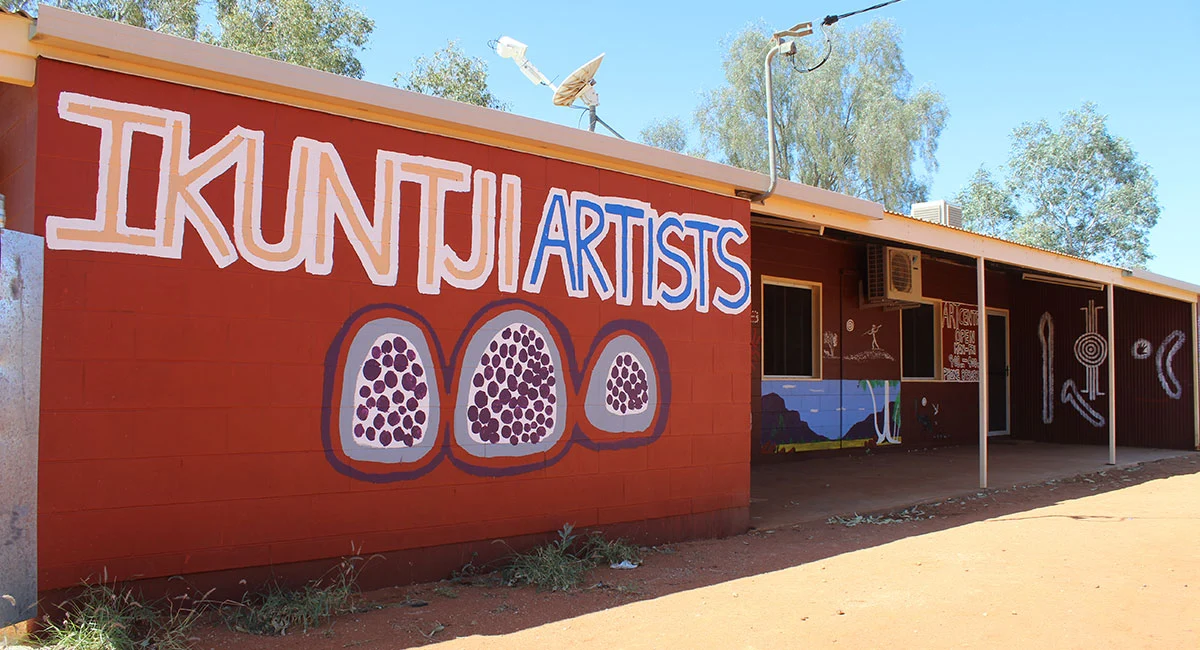
The first art centre established by women in the Western Desert, Ikuntji creates a space where Luritja women maintain the physical and spiritual connection to their Country through contemporary creative practice.
The impact, in short
Heritage
Community Governed
Ikuntji is governed by seven Indigenous directors who live and work locally.
Governance
From Canvas to Cloth
Ikuntji pioneered artist-designed textiles in the Central Desert, taking paintings into fashion and contemporary design.
Innovation
History In Their Own Voices
Artists are recording biographies, memories and community history that were previously missing from the record.
Economic
Reconnecting Culture
Artists work with museums to identify Luritja objects held overseas and reconnect them with their stories and Country.
What it is
Ikuntji Artists is an Aboriginal-owned and community-governed art centre in Haasts Bluff, a remote Luritja community west of Alice Springs. Its roots lie with the women of the community, who began painting together in the 1980s and established the art centre in 1992.
Today, artists work across painting, textiles and contemporary design while keeping Country and Tjukurrpa at the centre of the work. Ikuntji also looks backward as well as forward: its History and Museum Projects are recording artists’ stories in their own voices and reconnecting cultural objects held in overseas collections with the people and places they came from.
“Wearing Ikuntji designs makes me feel proud. It keeps alive the strong history that my grandmother started.”
Knowledge across generations
The 'Ikuntji History Project' works to document the biographies of artists in their own voices and languages, including Pintupi-Luritja, Pitjantjatjara, and Warlpiri. This oral and visual history is supported by 'bush trips' where elders bring younger generations back to important cultural sites on Country to record stories where they originated.
Artistic motifs are often passed directly between family members. For example, artist Mitjili Napurrula painted the Watiya Tjuta (trees used for spears) after her mother first drew the pattern in the sand to teach her father's Tjukurrpa. This practice ensures that the archive functions as a living tool for cultural transfer rather than a static record.
From Canvas to Couture
Ikuntji began translating paintings into textile designs in 2016, becoming the first Central Desert art centre to release its own textile collection. The fabrics carry stories of sandhills, waterholes, mountains, plains, Country and Tjukurrpa into clothing, interiors and contemporary design.
And this has gone genuinely far: Ikuntji appeared at Australian Fashion Week in 2023, and its textiles have entered major collaborations and international fashion contexts.
Reclaiming the record
Through the Ikuntji History Project, the centre has been rewriting artist biographies in their own voices and documenting community and art history through interviews, photography, film and language. The project explicitly focuses on voices — particularly women’s voices — that have been underrepresented in accounts of the Western Desert art movement.
Finding what was taken away
Since 2017, Ikuntji artists have visited museum collections in Australia and Europe to identify Luritja cultural objects, provide knowledge about their origins and advocate for the return of culturally significant material.
Watch
Women's Museum Story
The people behind the project
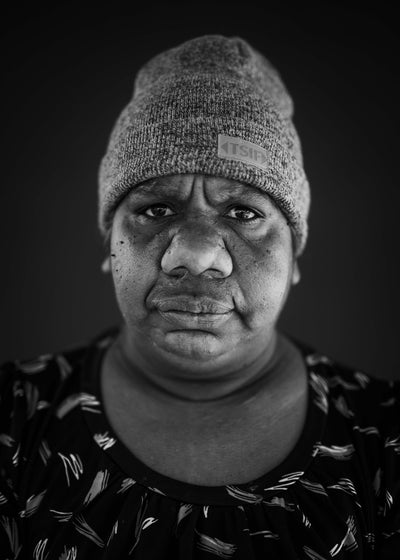
Roseranna Larry
Chairperson · Haasts Bluff
Leading the art centre's governance and carrying forward the history started by her grandmother.
Meet Roseranna Larry →Recommended by
Follow the thread
Across places and generations, women and their work are connected — through craft, tradition, community and shared experience. Sistra follows those threads.