Social Enterprise
Saheli Women
A women-led textile collective building livelihoods and bringing traditional craft back into the village economy in rural Rajasthan.
The heart of it
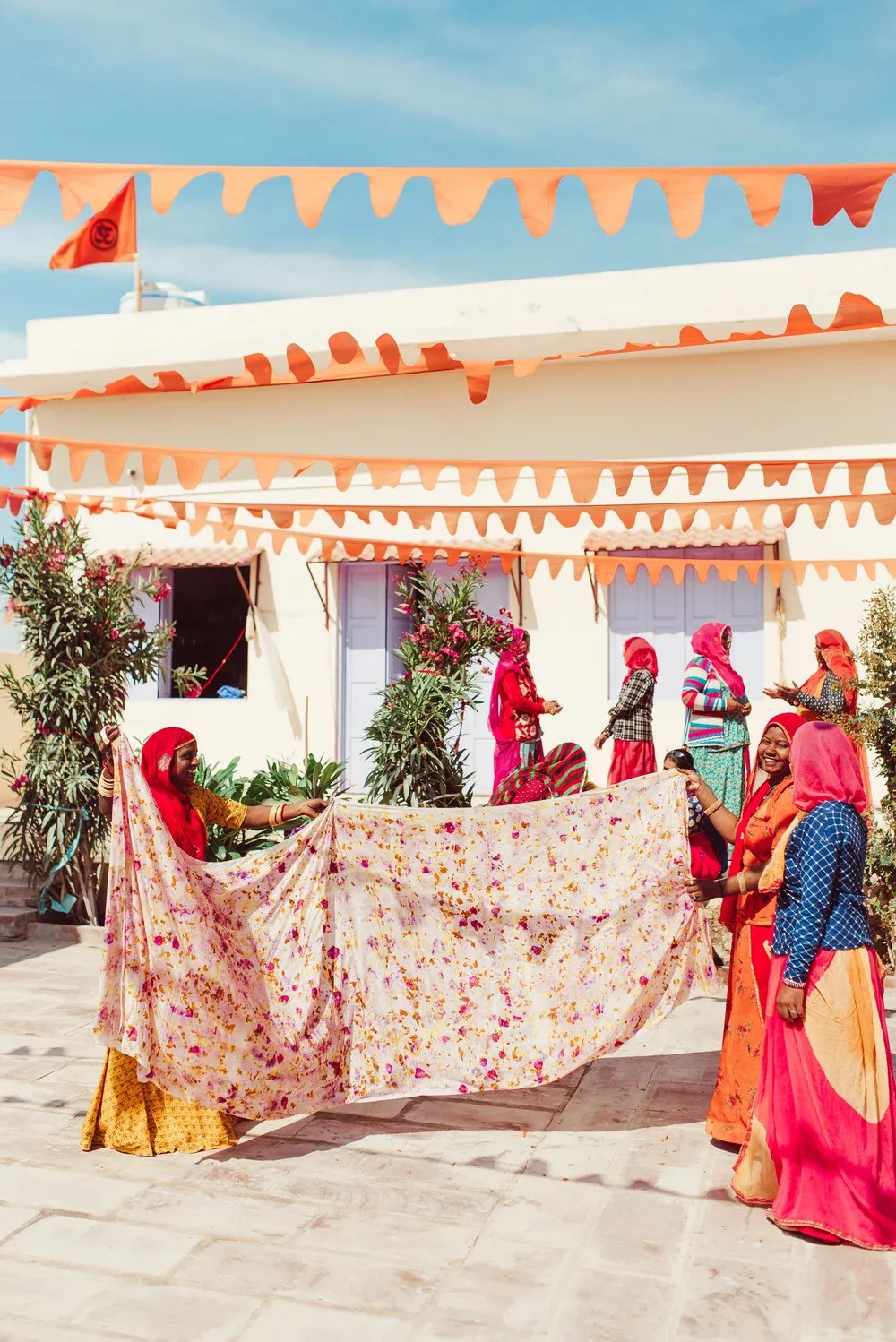
Saheli Women began with five women, $100 and sewing machines already sitting inside homes across Bhikamkor. Today, more than 100 artisans earn through textile work rooted in Rajasthan’s craft traditions.
The impact, in short
100+ women artisans
Saheli has grown from five women to more than 100 artisans.
50% higher wages
Artisans earn at least 50% more than the average income for similar work across India.
6–7 hour workdays
Typical workdays run around 6–7 hours, with flexible schedules designed around women’s lives and responsibilities.
Across caste and faith
The ateliers bring women from different caste and religious backgrounds into the same workplace.
What it is
Saheli Women began in 2015 after founder Madhu Vaishnav noticed that many women in Bhikamkor owned sewing machines, often received as part of their dowries, but had little access to paid work. Through her nonprofit, IPHD, she started a skills programme with five women and roughly $100. Today, Saheli works with more than 100 artisans across Bhikamkor and Kali Beri.
The collective produces slow-fashion textiles using techniques including handloom weaving, embroidery, eco-printing and natural dyeing, while incorporating reclaimed and upcycled fabrics into contemporary production.
Its model is designed around women’s lives: shorter workdays, childcare, transport assistance, health insurance and training in financial literacy and human rights. Saheli also connects rural makers to global markets, helping traditional textile skills remain economically viable rather than becoming heritage without livelihood.
“When you empower one woman, you empower an entire community.”
Beyond the atelier
Saheli’s ateliers are designed around more than employment. Women from different caste and religious backgrounds work alongside one another, while shorter, flexible workdays make it possible to balance paid work with family responsibilities.
The wider model includes health insurance, transport assistance, childcare, financial-literacy training and human-rights education. At the same time, skills such as handloom weaving, embroidery, eco-printing and natural dyeing help keep regional textile knowledge economically relevant rather than separating cultural preservation from livelihood.
The people behind the project
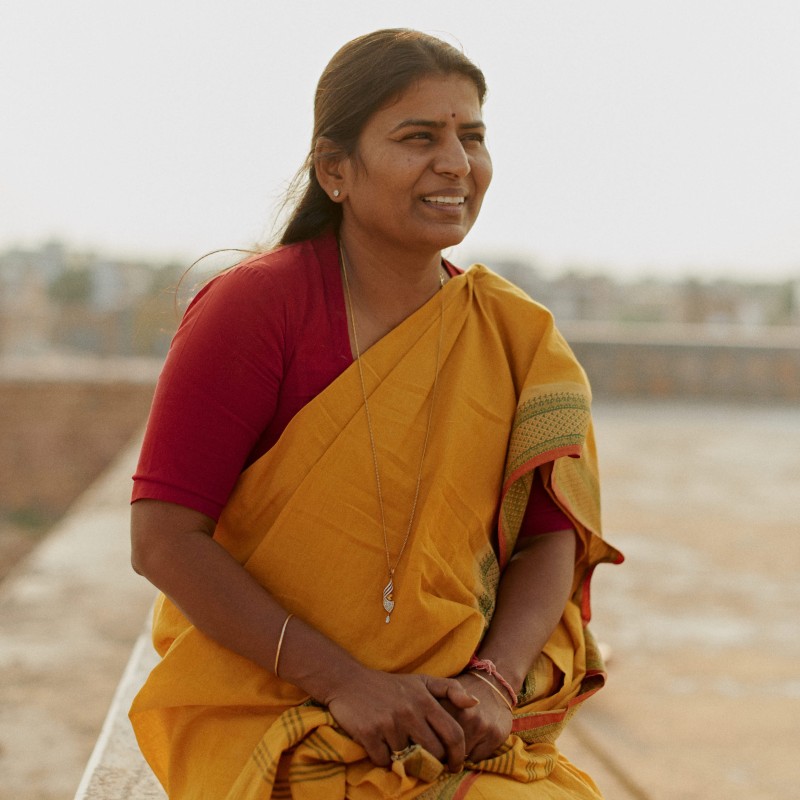
Madhu Vaishnav
Social entrepreneur, community development practitioner and founder · Jodhpur, India
A social entrepreneur working with women across rural Rajasthan through livelihoods, craft and community development.
Her story
Madhu founded Saheli Women in 2015 after seeing how much skill already existed among women in Bhikamkor, and how few opportunities they had to earn from it. What began with five women and a few sewing machines has since grown into a network of more than 100 artisans. She holds a degree in sustainable development and serves on the Advisory Committee for the UN Conscious Fashion & Lifestyle Network.
In her words
“I have seen in the centre ladies talking to our international clients through their clothes, not with words. It is sharing feelings with each other.”
What she's building toward
Madhu hopes to bring the Saheli model to more communities across rural Rajasthan, creating more opportunities for women to earn while continuing to invest in education, craft and community support.
Recommended by

Follow the thread
Across places and generations, women and their work are connected — through craft, tradition, community and shared experience. Sistra follows those threads.